 how-to
How to Make Lattes at Home Automatically: 2026 Guide
Table of Contents
- Why an Automatic Setup Beats Manual Brewing
- Your Super-Automatic Espresso Machine with Milk Frother, Explained
- Automatic Espresso Machine Settings for Latte: Dialing In Your Drink
- The Best Milk for Lattes: Dairy and Alternatives
- How to Make Lattes at Home Automatically, Step by Step
- Automatic Milk Frother Cleaning and Daily Maintenance
- Troubleshooting Weak, Bitter, or Thin Lattes
- Conclusion
- Frequently Asked Questions
Last Updated: October 18, 2026
Why an Automatic Setup Beats Manual Brewing
Learning how to make lattes at home automatically starts with one honest admission: the hard part of a latte was never the coffee. It is the milk. A manual setup asks you to pull a shot, steam milk to the right texture, and time both so they meet in the cup while everything is still hot. Miss one step and you get a lukewarm drink with flat foam.
A super-automatic machine with a built-in milk frother collapses those steps into one button press. At Modesto & Associates, we focus on exactly this: professional-grade automatic machines and milk cooling accessories that turn a morning ritual into a two-minute task. Below, we walk through the full workflow, from bean choice to cleanup, so you can decide whether an automatic setup fits your kitchen.
Your Super-Automatic Espresso Machine with Milk Frother, Explained
A super-automatic espresso machine with milk frother is a machine that grinds beans, tamps, brews espresso, and textures milk in one automated sequence. You choose a drink, press start, and the machine handles the rest.
Here is what happens inside a typical cycle:
- The built-in grinder doses fresh beans
- The brew unit tamps and pulls a shot at controlled pressure
- The milk system draws milk from a container or carafe
- Steam or air injects into the milk to build foam
- The machine dispenses milk and espresso in the programmed order
That last point matters more than most buyers realize. Some machines dispense milk first, then espresso, which layers the drink differently than the reverse. Neither is wrong. What matters is that the order stays the same every time, because that is what makes the drink repeatable.
If you want to make lattes at home automatically, this is the core machine type to look for. Manual and semi-automatic machines can produce excellent shots, but they leave milk texture in your hands. For busy mornings, that is the step worth automating.
Automatic Espresso Machine Settings for Latte: Dialing In Your Drink
The right automatic espresso machine settings for latte come down to four variables: coffee strength, espresso volume, milk volume, and froth level. Most machines expose these as separate adjustments, and understanding how they interact is the difference between a drink you tolerate and one you look forward to.
Start with coffee strength. A latte is milk-forward, so a weak shot disappears under the foam. Choose a medium-to-strong setting and adjust from there. If the drink tastes watery, increase strength before you change anything else. On most machines, strength is controlled by dose weight, so a stronger setting means more grams of coffee per shot, not a different grind.
Next, set espresso volume separately from total drink volume. This is the setting most people overlook. A classic latte uses a 1:3 to 1:4 espresso-to-milk ratio by volume. If your machine lets you program espresso volume independently, start with a 1.5-ounce shot (a standard double) and 4.5 to 6 ounces of milk.
Then adjust milk volume and froth level. Lower froth gives you a flatter, sippable drink. Higher froth builds a thicker cap. There is no universal correct answer here, only what you prefer in the cup.
Use this quick reference when you are dialing in a new machine:
| Setting | Start Here | Adjust When |
|---|---|---|
| Coffee strength | Medium-strong (roughly 18-20 g dose) | Drink tastes watery or weak |
| Espresso volume | 1.5 oz (double shot) | Shot tastes bitter or under-extracted |
| Milk volume | 4.5-6 oz | Drink tastes too coffee-forward or too milky |
| Froth level | Medium | You want a thicker or thinner cap |
A common pattern among automatic machine owners is to chase grind adjustments when the real issue is dose. If your machine lets you adjust grind, change it one step at a time and pull two shots before judging. Grind changes take a shot or two to stabilize because the burrs retain grounds from the previous setting. Adjust strength and volume first, then grind, then froth. That order saves beans and frustration.
Finally, save your settings as a named profile if your machine supports it. A latte profile that you never touch is worth more than a dozen experiments you can't remember.
The Best Milk for Lattes: Dairy and Alternatives
The best milk for lattes is whole milk, because its fat and protein build stable, glossy microfoam. Skim milk foams easily but produces a thinner, drier texture. Whole milk gives you the silky consistency most people associate with a café latte.
Plant milks behave differently, and that is where automatic machines earn their keep. Barista-style oat and soy milks are formulated to foam well under steam. Standard almond and coconut milks often separate or turn bubbly. If you drink plant milk daily, look for a barista version and test it on your machine's milk setting before committing to a brand.
Temperature matters too. Cold milk from the refrigerator foams more predictably than milk that has sat on the counter. This is where a milk cooling accessory helps: it keeps the milk at a steady cold temperature between drinks, so the first latte and the third behave the same way.
A few practical notes:
- Whole milk: best foam, richest texture
- Barista oat milk: closest plant-based match for microfoam
- Skim milk: foams fast, thinner body
- Standard almond milk: test first, results vary
How to Make Lattes at Home Automatically, Step by Step
Here is the complete workflow for how to make lattes at home automatically, using any super-automatic machine with a milk system. The steps are machine-agnostic on purpose.
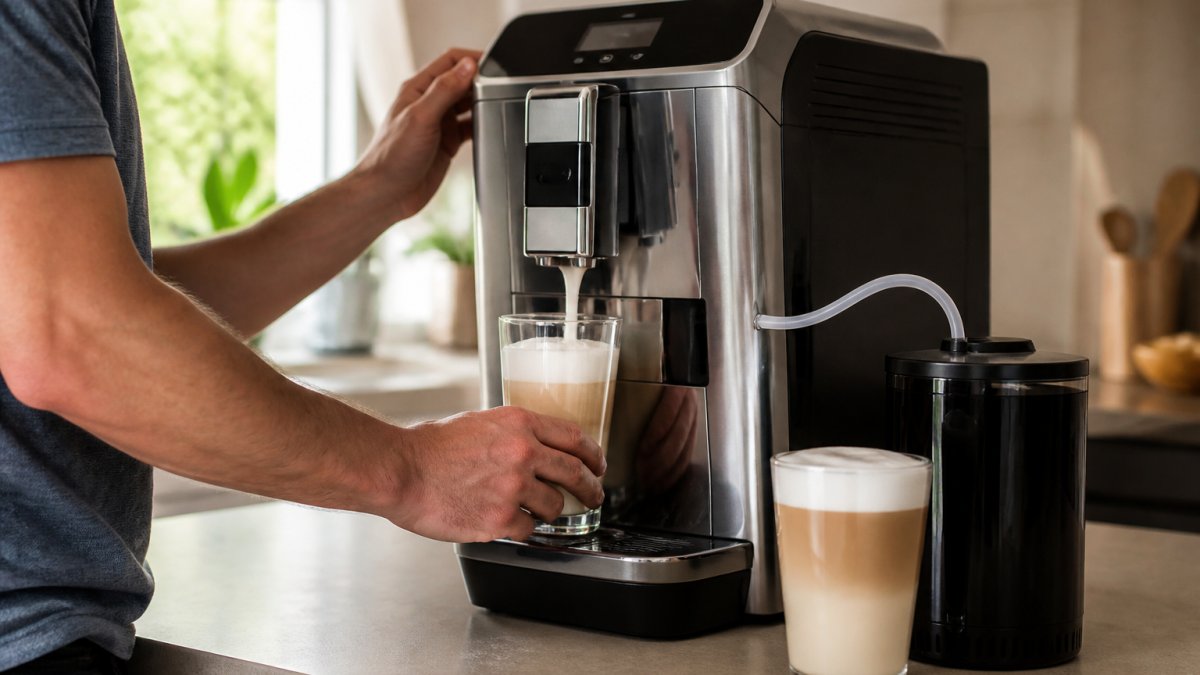
- Fill the bean hopper. Use fresh beans and keep the hopper lid closed to preserve aroma.
- Fill and chill the milk container. Cold milk froths better. Keep it refrigerated until you brew.
- Select the latte program. Choose your saved drink or the latte preset.
- Adjust strength, volume, and froth if needed. Make one change at a time.
- Place a tall glass under the spout. A tall glass gives the foam room to settle.
- Press start and let the machine work. Do not move the glass mid-cycle.
- Wait for the milk and espresso to finish dispensing. The machine sequences both for you.
- Stir gently and serve. A slow stir blends the layers without killing the foam.
The whole cycle typically takes a couple of minutes, depending on your drink volume and how long the machine takes to heat up. That is the trade you make for consistency: less control, far less effort.
Automatic Milk Frother Cleaning and Daily Maintenance
Automatic milk frother cleaning is the step that decides whether your machine stays reliable. Milk residue turns sour fast, and a dirty milk line will flavor every drink that follows.
Most machines include a rinse cycle. Run it after every milk drink, not just at the end of the day. It takes seconds and clears the milk path before residue sets.
Beyond the daily rinse:
- Run the full cleaning program on the schedule your machine specifies
- Remove and rinse the milk container and its pickup tube daily
- Wipe the dispensing spout after each use
- Descale on the machine's reminder, using the product it recommends
- Check that the milk cooling accessory stays clean and cold
If your machine uses a milk carafe with a lid and gasket, take it apart weekly. Residue hides in the seams. A soft brush and warm water handle most of it.
Troubleshooting Weak, Bitter, or Thin Lattes
Bad lattes usually trace back to one of five causes: weak coffee, bitter coffee, thin foam, a drink that is too milky, or a drink that is lukewarm. Each has a different fix, and the order you check them in matters.
1. Check the milk first. Milk is the most common culprit and the easiest to fix. If the foam is thin or collapses quickly, the milk is likely too warm, too old, or not cold enough before frothing.
2. Check the beans. Old beans flatten flavor and produce thin crema. If your beans have been in the hopper for more than two weeks, empty the hopper and start fresh.
3. Adjust strength and volume. If the drink tastes weak or watery, raise coffee strength before you change anything else. If it tastes too milky, lower milk volume or increase coffee strength. A latte should still taste like coffee.
4. Check the milk system for residue. A dirty milk line will flavor every drink that follows and break foam.
5. Check temperature. A lukewarm drink usually means the machine is not fully heated or the milk was not cold enough to start. Most machines need a few minutes to reach brew temperature after powering on.
If you have worked through all five checks and the drink is still off, the problem is likely the machine's brew unit or grinder, not your settings. Consult your machine's manual for a brew unit cleaning procedure before assuming a repair is needed.
Conclusion
The real challenge with home lattes is not learning a technique. It is building a routine that survives a busy morning, week after week. An automatic machine with a reliable milk system, cold milk on hand, and a rinse habit you never skip will outperform a manual setup you only have time for on weekends.
At Modesto & Associates, we stock professional super-automatic espresso machines and milk cooling accessories built for exactly that routine, with barista-quality coffee at home and café-standard drinks without the café stop. Shop Magic M2+ and see how simple your morning latte can become.
Frequently Asked Questions
How do you make a latte with a super-automatic espresso machine?
Fill the bean hopper and water tank, attach the milk container or place the intake tube in cold milk, then select a latte from the drink menu. The machine grinds, tamps, and pulls the espresso shot, then steams and dispenses milk foam into your cup. Most models let you adjust coffee strength, drink volume, and froth level before you press start. The whole cycle usually finishes in under two minutes, and you can save your preferred settings as a custom profile so the next drink is one touch.
What milk works best in an automatic latte machine?
Whole milk produces the thickest, most stable microfoam because its fat and protein content holds bubbles well. Two-percent milk works but gives a thinner texture. Oat and almond milks labeled barista-style are formulated to foam without separating, while standard nut milks can turn watery under steam. Keep milk cold, straight from the refrigerator, and use it within a few days of opening. If you want a dairy-free latte, test one carton at a time to see how your machine's frother handles it.
How can you adjust an automatic latte to taste stronger?
Three settings control strength: coffee dose, grind size, and milk volume. Increase the coffee strength setting or grind finer to extract more flavor from the same beans. Reducing milk volume or the froth level also concentrates the espresso flavor in the cup. On many machines you can pull a double shot into a smaller milk drink, which is close to a flat white. Change one variable at a time and taste before adjusting again, so you know which setting made the difference.
How do you clean an automatic milk frother after making a latte?
Run the machine's rinse cycle immediately after your last milk drink, while residue is still soft. Most super-automatics have a dedicated milk-system rinse that pushes hot water or steam through the lines and nozzle. Once a week, disassemble removable milk parts and wash them with warm water and mild detergent, then let them air dry. Follow the machine's descaling schedule for the water side. Skipping rinses is the fastest way to clogged lines and sour-tasting foam.