 how-to
7 Steam Wand Cleaning Mistakes That Ruin Your Espresso
Last Updated: October 29, 2026
Quick Summary
Proper steam wand cleaning means wiping the wand while it is still hot, purging steam for one or two seconds, then wiping again with a fresh damp cloth. This 30-second routine after every use prevents milk residue from baking into blockages that cause weak steam and sour-tasting milk.
- Wipe the wand immediately after steaming while the metal is still hot, using a thick folded damp cloth.
- Purge the steam valve for one or two seconds to blast out milk that crept inside the tip.
- Soak fixed or removable tips in hot water with a drop of mild dish soap, never submerging the wand body.
- Clear clogged holes gently with a pin tool or paper clip, and stop after three soak-and-clear cycles.
- Vinegar soaks are weekly and should always be followed by a full hot water rinse to protect seals.
Table of Contents
- The 30-Second Steam Wand Cleaning Routine After Every Use
- How to Clean a Milk Frother Wand Without Damaging the Tip
- How to Unclog an Espresso Machine Steam Wand When Steam Stops Flowing
- Choosing a Steam Wand Cleaning Brush and Safe Cleaning Solutions
- How Often to Clean a Steam Wand: Daily, Weekly, and Monthly Tasks
- Cleaning by Machine Type: Super-Automatic, Manual, and Milk Cooler Setups
- Shop the Magic M2+ and Keep Your Steam Wand Spotless
- Frequently Asked Questions
The 30-Second Steam Wand Cleaning Routine After Every Use
Learning how to clean a steam wand properly takes less time than waiting for your espresso to finish pouring. The steam wand is often the dirtiest part of an espresso setup, and it's also the easiest to neglect. Milk residue left on a hot wand bakes into a hard film within minutes. That film turns into blockages, and blockages turn into weak steam and sour-tasting milk.
Here is the routine we recommend after every single use.
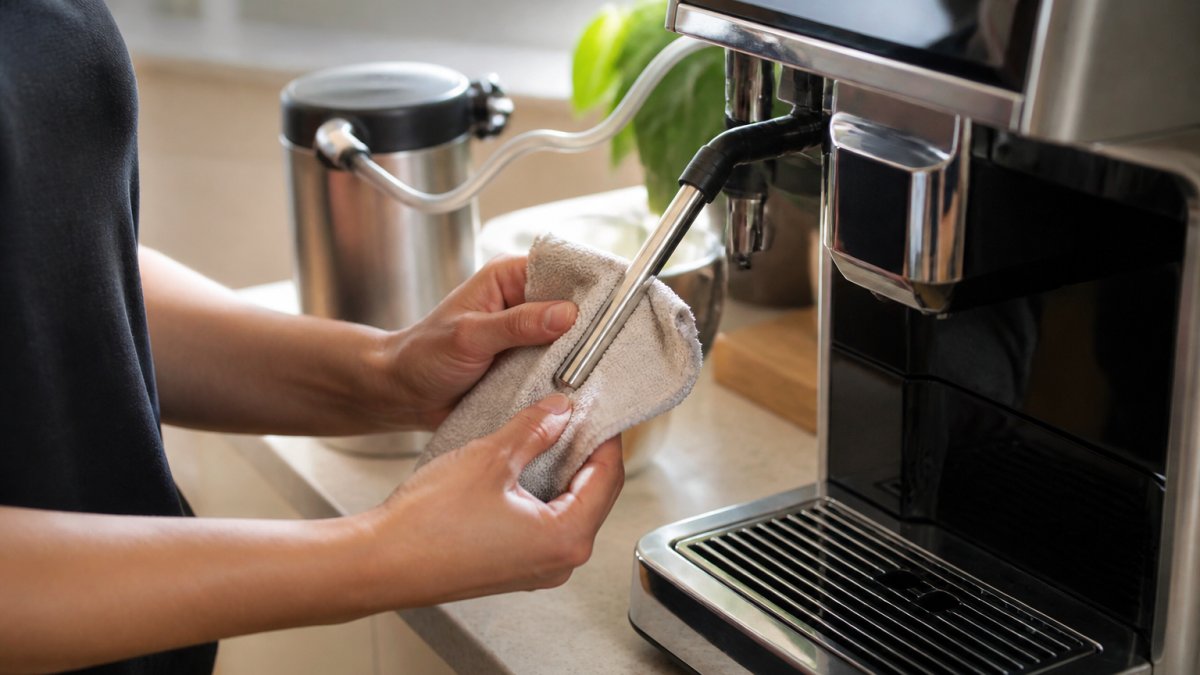
Step 1: Wipe While the Wand Is Still Hot
Wipe the wand immediately after you finish steaming, while the metal is still hot. Use a clean, damp cloth and wrap it around the wand from top to bottom. Hot milk wipes away in one pass. Cold, dried milk needs soaking and scraping.
Watch out: a hot wand can burn your fingers through a thin cloth. Fold the cloth into a thick pad and grip the wand near the base, away from the tip.
Step 2: Purge, Then Wipe Again
Purging steam is the step most people skip. Open the steam valve for one or two seconds to blast out any milk that crept up inside the tip. Then wipe the wand a second time with a fresh damp cloth.
Why the second wipe? Purging pushes residue back down to the surface. One wipe leaves it there. Two wipes remove it.
That's the whole routine: wipe hot, purge, wipe again. Thirty seconds, every time.
How to Clean a Milk Frother Wand Without Damaging the Tip
Cleaning a milk frother wand without damage comes down to knowing what kind of tip you have and what it is made of. The tip and its steam holes are precision parts. Bend them once and the wand never steams evenly again. Matching the cleaning method to the tip type helps prevent damage.
Identify your tip type first
- Removable tips unscrew or pull off. Soak them separately in hot water with a drop of mild dish soap, then rinse and reattach. Never soak the wand body with the tip removed, because water can enter the steam channel.
- Fixed tips stay on the wand. Clean them in place with a damp cloth and a short steam purge. Do not twist or pry a fixed tip, because the seal is not designed to come apart.
- Single-hole tips are common on home machines. One hole means one clog can stop steam entirely, so check it after every use.
- Multi-hole tips spread steam across several small openings. A single blocked hole causes uneven frothing rather than a full stop, which makes the problem easy to miss. Inspect each hole weekly.
Match the method to the material
Stainless steel wands tolerate hot water, mild dish soap, and diluted white vinegar. Chrome-plated and painted wands can discolor or flake with repeated vinegar soaks, so use a purpose-made milk cleaner instead and keep soaks short. Never use bleach, abrasive powders, or steel wool on any wand finish, because they scratch the surface and leave pits where milk residue collects.
The safe deep-clean sequence
- Fill a small cup with hot water and a drop of mild dish soap.
- Submerge only the tip, not the wand body.
- Run steam for two to three seconds to pull the soapy water through the holes.
- Rinse the same way with clean hot water.
- Wipe dry and purge once more.
If you want the full picture on milk texture and technique, our guide on how to froth milk like a barista pairs well with a clean wand. Clean equipment is half the reason good microfoam holds its shape, which is why our article on achieving cafe quality microfoam at home starts with wand care.
How to Unclog an Espresso Machine Steam Wand When Steam Stops Flowing
When steam sputters or stops, dried milk has blocked the steam holes. This is the most common steam wand problem we hear about. The fix is patient soaking and gentle clearing, not force. Work through these steps in order and stop as soon as steam flows evenly.
Step 1: Cool and inspect
Turn the machine off and let the wand cool before touching the tip. Hot steam and pressurized parts can burn you, and a cool wand is easier to inspect. Shine a light on the tip and count the holes. Note which ones look blocked with white or brown residue.
Step 2: Soak to soften the residue
Fill a cup with hot water and let the wand tip sit in it for 15 minutes. Dried milk softens and lifts away. For stubborn blockages, add a small amount of white vinegar to the hot water and soak another 15 minutes. Keep the wand body out of the water.
Step 3: Clear each hole gently
Use the small pin tool that came with your machine, or a paper clip. Push gently through each hole one at a time. Never drill, twist, or force a larger tool into the hole, because the opening is sized for steam flow and can be deformed. If a hole will not clear after two attempts, move on and repeat the soak.
Step 4: Rinse and test
Rinse the tip with clean hot water, then run steam for a few seconds over a sink. Watch the flow. Even, steady steam means the clog is cleared. Sputtering or a weak stream means residue remains. Repeat the soak and clear cycle. Most clogs clear on the second round.
Step 5: Know when to stop
If steam still will not flow after three soak-and-clear cycles, stop. Continuing to poke can damage the tip or push residue deeper into the wand. Consult your machine manual for the manufacturer's recommended cleaning procedure, or contact a service provider. A blocked internal channel or a failed steam valve is not a DIY fix.
Choosing a Steam Wand Cleaning Brush and Safe Cleaning Solutions
A steam wand cleaning brush should have soft nylon bristles and a small head that fits around the wand. Stiff wire brushes scratch stainless steel and leave marks that trap residue. Look for a brush with a narrow tip for reaching the steam holes.
For cleaning solutions, stick to these:
- Mild dish soap and hot water for daily wipes
- White vinegar diluted in water for occasional soaks
- A dedicated milk frother cleaner for heavy baked-on milk
Avoid bleach and abrasive powders. They damage the finish and can leave residue that ends up in your next latte.
A simple rule: if you wouldn't use it on a good pan, don't use it on your wand.
How Often to Clean a Steam Wand: Daily, Weekly, and Monthly Tasks
How often to clean a steam wand depends on the task. Wiping and purging happen after every use. Deeper cleaning follows a longer schedule.
| Task | Frequency | Time Needed |
|---|---|---|
| Wipe and purge | After every use | 30 seconds |
| Soapy water flush | Daily | 2 minutes |
| Vinegar soak and hole clearing | Weekly | 30 minutes |
| Full wand inspection and deep clean | Monthly | 45 minutes |
Daily wiping prevents buildup. Weekly soaking removes what wiping misses. Monthly inspection catches worn seals and loose tips before they fail.
Our broader guide on how to clean super automatic espresso machines covers the full cleaning schedule for your whole machine, including descaling and brew group care.
Cleaning by Machine Type: Super-Automatic, Manual, and Milk Cooler Setups
Cleaning routines shift with your setup. If cleaning is a struggle, it may be worth considering machines that are easier to maintain. A super-automatic machine often runs an automatic rinse cycle, but the wand still needs a manual wipe and purge. Manual machines need the same care plus a wipe of the wand base where milk pools.
Milk cooler setups add one more step. Remove the milk container and rinse it daily. Clean the pickup tube and connector with warm soapy water. For guidance on maintaining ideal milk temperature alongside clean equipment, see our related article.
Shop the Magic M2+ and Keep Your Steam Wand Spotless
A clean wand is a habit, not a chore. Build the 30-second routine into every steam, soak weekly, and your wand will steam evenly for years. Skip it, and you'll be clearing clogs and replacing tips.
At Modesto & Associates, we built our machine lineup around making that habit easy. The Magic M2+ is a professional-grade super-automatic espresso machine with integrated milk cooling.
Get started with Modesto & Associates and enjoy cafe-standard drinks with a wand that stays spotless.
Frequently Asked Questions
Why does milk stick to my steam wand?
Milk proteins and sugars bond to hot metal within seconds of steaming. If you wait until the wand cools, that residue bakes on and turns into a hard film that a quick wipe cannot remove. Wiping the wand immediately after every use, while it is still hot, is the single most effective habit for preventing buildup. A damp cloth and a short purge handle 90% of the problem before it starts.
Should I purge a steam wand before or after wiping it?
Do both. Purge for one to two seconds before steaming to clear condensation from the tip, then wipe the wand with a damp cloth immediately after steaming, then purge again for one to two seconds to blow out any milk that crept into the steam holes. That second purge is the step most people skip, and it is the one that keeps the internal channel clear.
How often should I clean an espresso machine steam wand?
Wipe and purge after every single use. Soak the tip in a milk frother cleaning solution once a week to loosen residue the cloth cannot reach. Do a deeper soak of the wand and tip monthly, and check the steam holes with a cleaning brush at the same time. If you steam milk several times a day, move the weekly soak to twice a week.
Can I soak a steam wand tip in milk cleaner?
Yes, the tip can be soaked in a milk frother cleaning solution, but check your machine manual first. Some manufacturers specify how far up the wand the soak line should go, and submerging past that point can push cleaner into places it should not reach. A 15-minute soak in warm water with cleaner is usually enough to loosen dried milk. Rinse well and purge afterward.