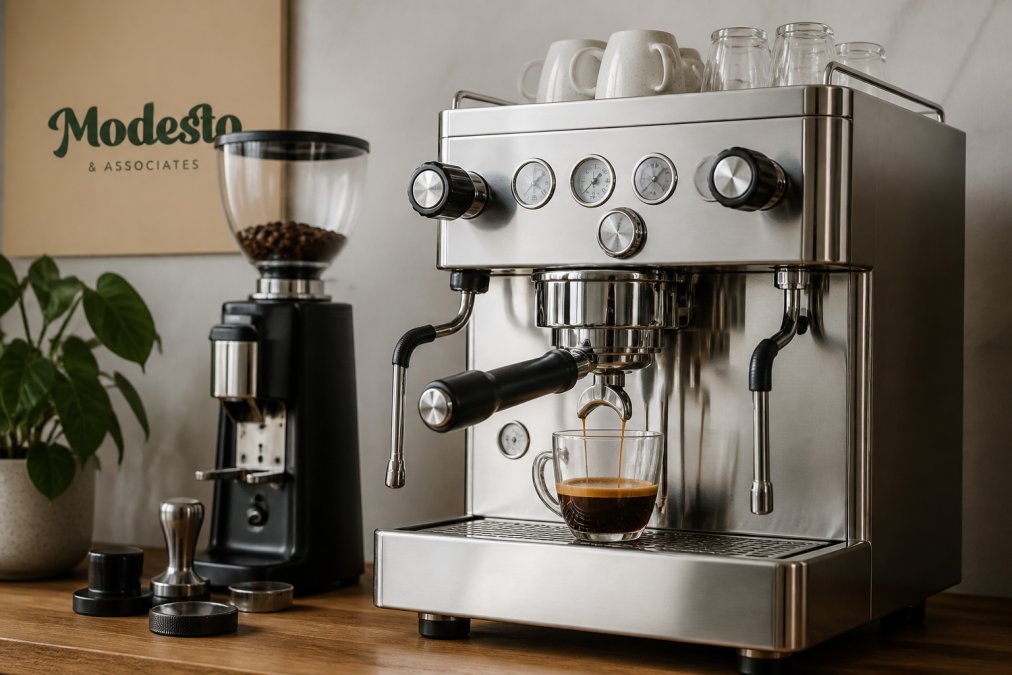
 comparison
Is a Dual Boiler Espresso Machine Worth the Price?
Table of Contents
- How Dual Boiler Espresso Machines Work
- Dual Boiler vs Heat Exchanger Espresso Machine
- The Real Cost of Ownership: Energy, Water, and Maintenance
- Home Espresso Machine Break-Even Analysis
- Is a Super Automatic Espresso Machine Worth It for Busy Households?
- Resale Value and Long-Term Ownership
- Conclusion
- Frequently Asked Questions
Last Updated: September 19, 2026
How Dual Boiler Espresso Machines Work
A dual boiler espresso machine uses two separate heating vessels: one for brewing and one for steaming. This design lets you pull a shot and steam milk at the same time, without waiting for the machine to switch modes.
That single change is why the question "is a dual boiler espresso machine worth the price" keeps coming up in coffee forums and kitchen showrooms alike. At Modesto & Associates, we hear it from customers. The short answer: it depends on how many milk drinks you make and how much you value not waiting.
Brew Boiler, Steam Boiler, and PID Control
The brew boiler holds water at a stable extraction temperature, usually somewhere in the low 90s Celsius. The steam boiler runs hotter and builds pressure for milk texturing. A PID controller manages both, adjusting heat in small increments instead of cycling on and off.
That precision matters more than most buyers realize. Temperature swings of a few degrees change how a shot tastes, and a PID keeps those swings small.
Warm-Up, Recovery Time, and Thermal Stability
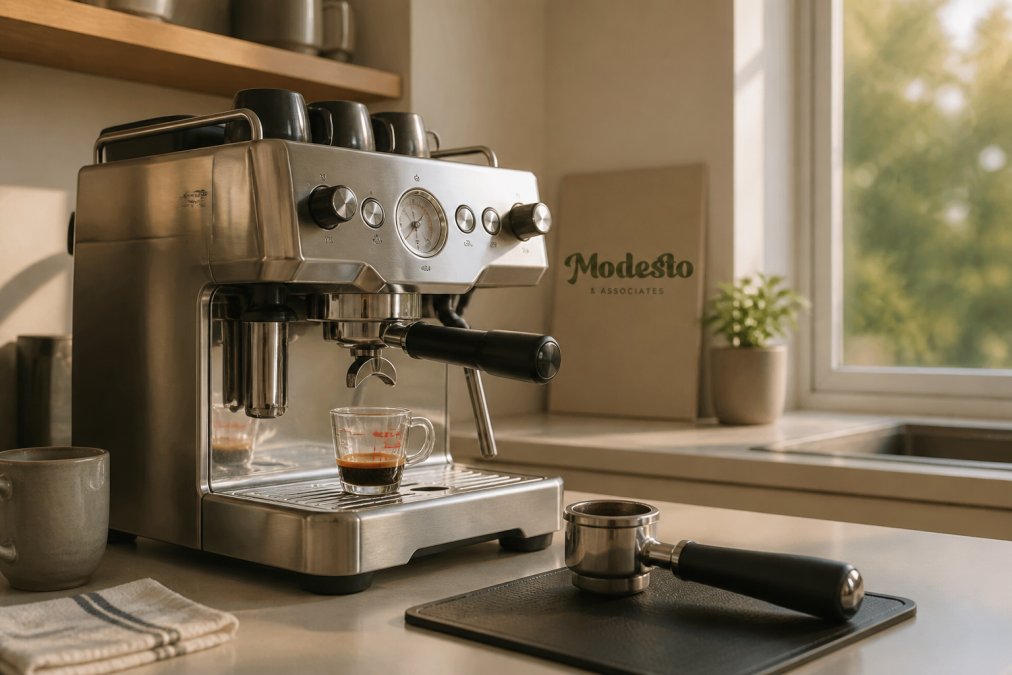
Thermal stability is the ability to hold the same temperature across an entire shot and across back-to-back shots. Dual boilers excel here because the brew boiler is not drained by steaming.
Warm-up time is the trade-off. A dual boiler with heavy brass and stainless components needs time to reach temperature, and rushing it produces sour, uneven espresso. Recovery time, the gap before the machine is ready for the next shot, is where dual boilers beat most alternatives.
Dual Boiler vs Heat Exchanger Espresso Machine
A dual boiler machine keeps brew and steam water in separate vessels, while a heat exchanger runs brew water through a tube inside a single steam boiler. The difference shows up in temperature control and in how the machine feels to use.
A heat exchanger machine can brew and steam at the same time, but the brew temperature depends on how long you flush the group first. That flushing routine is a skill, and skipping it produces inconsistent shots. On a heat exchanger, the brew water sits in a tube surrounded by steam-boiler water that is often above 250°F, so the group needs a cooling flush before the first shot. Miss it and the shot runs hot and bitter; over-flush and it runs cool and sour.
Dual boilers remove that variable. You set a temperature, and the machine holds it. The trade-off is cost, size, and a longer warm-up.
| Feature | Dual Boiler | Heat Exchanger |
|---|---|---|
| Brew and steam at once | Yes | Yes |
| Temperature control | Independent PID per boiler | Shared boiler, flush-dependent |
| Learning curve | Low for temperature | Moderate, flush routine needed |
| Warm-up time | Longer | Shorter |
| Footprint | Larger | Smaller |
| Best for | Milk drinks and repeat shots | Budget-minded espresso drinkers |
Will a Beginner Actually Taste the Difference?
This is where most comparisons stop, and it is the part that matters most for the 'worth the price' question. A beginner pulling one shot a day with a mid-range grinder will often struggle to tell a well-flushed heat exchanger shot from a dual boiler shot. The grinder, the beans, and the puck prep usually dominate the cup more than the boiler design at that stage.
A more experienced home barista, or anyone pulling back-to-back milk drinks, will notice the difference quickly. The dual boiler removes the flush variable, so the second and third shots taste like the first. On a heat exchanger, the recovery flush between shots becomes a moving target as the boiler cycles.
A useful rule of thumb: if you make one drink a day and are still learning, a heat exchanger or a high-quality single boiler with PID will get you most of the way there for less money.
The Real Cost of Ownership: Energy, Water, and Maintenance
Purchase price is only part of what a dual boiler costs you. Energy use, water quality, and descaling all shape the long-term bill, and most buying guides skip them entirely.
Electricity Consumption and Warm-Up Habits
Two heating elements working at once pull more current than one. The practical fix is scheduling: warm the machine before you actually need it, then let it idle down.
Water Quality, Scale Buildup, and Descaling
Scale buildup is the quiet killer of espresso machines. Hard water leaves mineral deposits inside boilers and group heads, which reduces flow and eventually damages heating elements.
Home Espresso Machine Break-Even Analysis
A home espresso machine break-even analysis compares what you spend on café drinks against the cost of brewing at home. The math is simpler than most people expect, but it only becomes persuasive when you actually run the numbers instead of listing the inputs.
- Café equivalent: 4 drinks x $6.50 x 365 = about $9,490 per year
- Beans: about 2,920 shots x $0.60 = about $1,750 per year
- Milk: about 1,460 drinks x $0.40 = about $580 per year
- Consumables and filters: about $100 per year
- Total home cost: roughly $2,430 per year
A few inputs to gather before you trust any break-even claim:
- Average café spend per drink and drinks per week
- Cost per pound of beans and grams used per shot
- Milk or alternative milk cost per drink
- Filter and descaling supplies per year
- Machine purchase price and any financing cost
- Resale value you expect at year five
Is a Super Automatic Espresso Machine Worth It for Busy Households?
For households short on time, a super automatic machine often delivers more daily value than a manual dual boiler. It grinds, doses, tamps, and brews at the push of a button.
A super automatic suits:
- Busy professionals who want espresso without a learning curve
- Households where multiple people make different drinks
- Anyone entertaining guests and needing several drinks quickly
Resale Value and Long-Term Ownership
Well-built espresso machines hold value better than most kitchen appliances. Brands with strong enthusiast followings and widely available parts tend to resell fastest.
Conclusion
Choosing between a dual boiler and a simpler machine comes down to how you drink coffee and how much you value consistency. If you make milk drinks daily and want café-standard results without guesswork, the investment pays off in both quality and time saved.
Frequently Asked Questions
Which is better, a heat exchanger or a dual boiler?
It depends on how you drink your coffee and how many milk drinks you make back-to-back. A dual boiler espresso machine keeps brew and steam temperatures separate, so you can pull a shot and steam milk at the same time without temperature swings. A heat exchanger uses one boiler and relies on a flush routine to stabilize brew temperature. For straight espresso drinkers, a heat exchanger can be enough. For daily lattes and cappuccinos, dual boiler temperature stability and steam power usually justify the higher cost.
How long does a dual boiler espresso machine last?
Most prosumer dual boiler machines are built with commercial-grade parts like rotary pumps, brass or stainless boilers, and E61 or saturated group heads. With regular descaling and gasket replacement, many owners report 8 to 15 years of service. The lifespan depends heavily on your water quality, how often you backflush, and whether you use filtered water. Machines plumbed into a water line with a softener tend to last longer than those running hard tap water through a reservoir.
Are dual boiler machines more energy-efficient than heat exchanger models?
Not necessarily. A dual boiler espresso machine heats two boilers, so warm-up time and idle energy use can be higher than a single-boiler heat exchanger. The difference narrows if you use a smart plug or timer to power the machine on only when you need it. Machines with PID controllers and insulated boilers reduce standby loss. If electricity cost matters to you, compare wattage, warm-up time, and whether the machine has an eco mode before you buy.
Is a dual boiler machine overkill for a casual home coffee drinker?
For one espresso a day with no milk, a dual boiler espresso machine is more capacity than you need. The value shows up when you make multiple milk drinks, entertain guests, or want repeatable shot consistency without flush routines. If you mostly drink drip coffee or single espressos, a single boiler or a super automatic machine will cost less and take up less counter space. Match the machine to your actual weekly drink count, not the occasional weekend experiment.
What maintenance costs should I expect with a dual boiler espresso machine?
Plan for filtered water or a softening system, replacement group gaskets, backflush detergent, and periodic descaling. Rotary pump machines may need pump or valve service after several years. Budget for a professional service every two to three years if you use hard water. Compared with daily cafe visits, these costs are small, but they are real. Check whether your machine uses a reservoir or can be plumbed in, because plumbed-in setups usually reduce long-term maintenance effort.