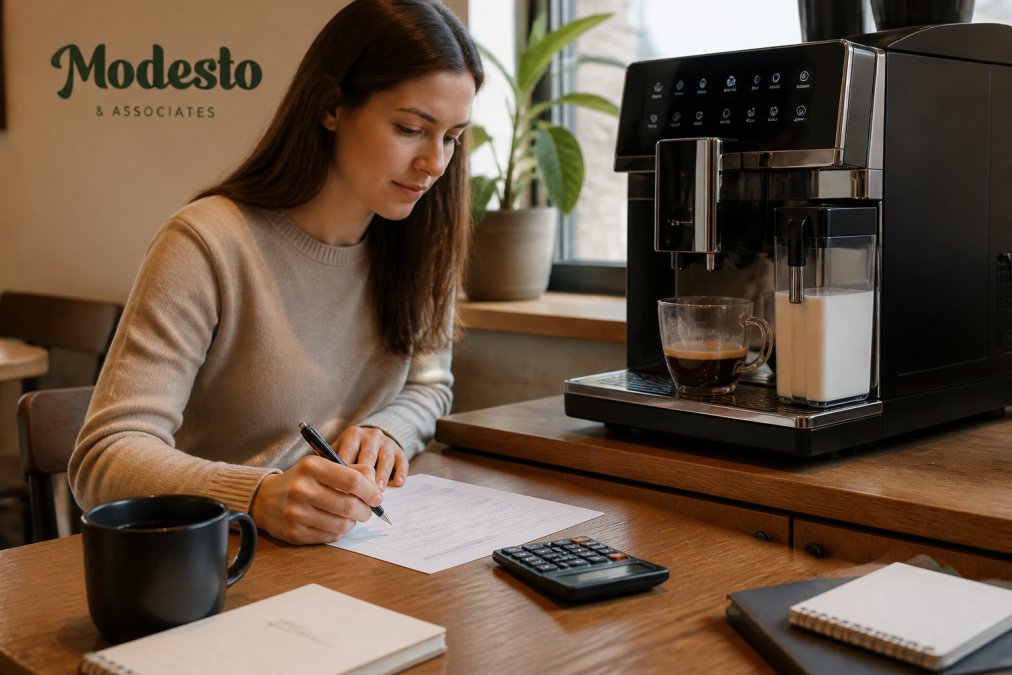
 ultimate-guide
How Long to Break Even on an Espresso Machine: 2026 Guide
Table of Contents
- The Break-Even Math: What You're Actually Solving For
- Cost Per Cup of Home Espresso vs. Café Prices
- Setup Investment: What You'll Spend Upfront
- Maintenance Costs of Espresso Machines You Can't Ignore
- Is a Super Automatic Espresso Machine Worth It? Running the Numbers
- Cautious vs. Optimistic Scenarios: Your Real Payback Window
- Frequently Asked Questions
Last Updated: September 11, 2026
The Break-Even Math: What You're Actually Solving For
Figuring out your break even espresso timeline comes down to one question: how much are you currently spending on café drinks, and how much does it cost to make those drinks at home? The break-even point is the moment your cumulative savings from home brewing equal what you paid for the machine.
Fixed Costs vs. Variable Costs
Fixed costs are the one-time expenses: the machine itself, a grinder if it isn't built in, a milk cooling accessory, and any initial setup items like a tamper or scale. These don't change whether you pull one shot or ten.
Variable costs are what you spend per drink: beans, milk, water filters, and cleaning supplies. These scale with your daily consumption.
The break-even formula is straightforward: divide your total fixed costs by your monthly savings (café spending minus home brewing costs). The result is your payback period in months.
The Payback Period Formula
Here's the calculation most guides skip:
Payback Period = Total Setup Investment ÷ (Monthly Café Spend - Monthly Home Brewing Cost)
If your setup costs $1,500 and you save $150 per month, you break even in 10 months. But that simple formula hides variables that can stretch or shrink that window considerably.
Cost Per Cup of Home Espresso vs. Café Prices
The cost per cup of home espresso typically runs a fraction of what you'd pay at a coffee shop, but the exact figure depends on your bean quality, milk usage, and how many shots you pull per day. The only way to make the comparison honest is to build the per-cup cost from the bottom up, then stack it against what you actually hand over at the register.
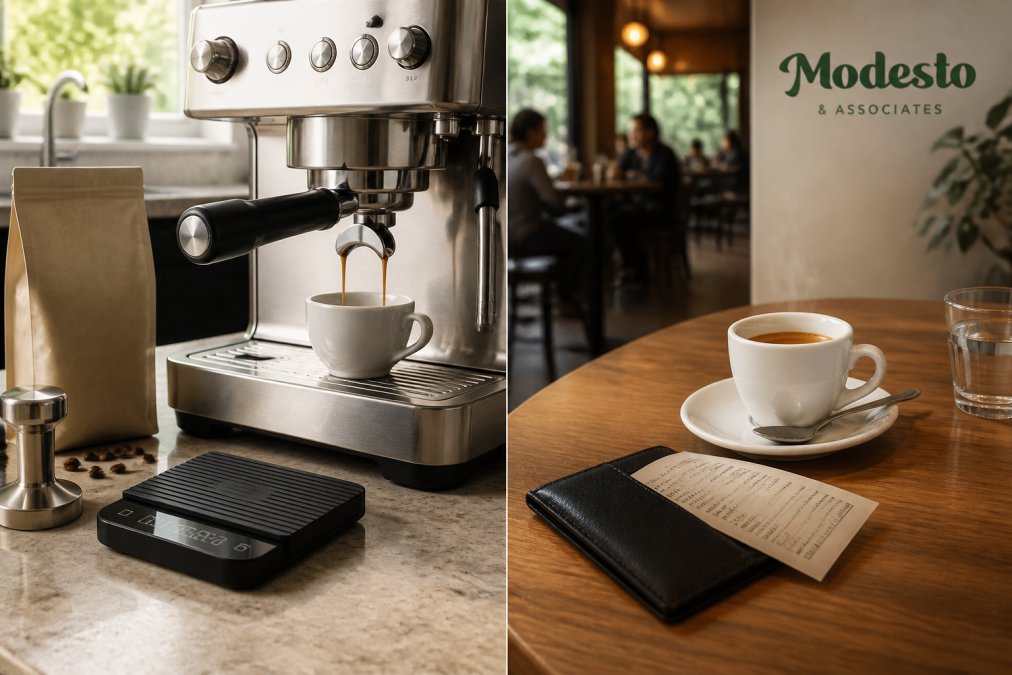
What Goes Into a Home Shot
A standard double shot uses roughly an 18g dose of coffee (sca.coffee). At a typical specialty roaster price of about $16 to $22 per 12 oz bag, that works out to roughly $0.85 to $1.15 per double shot before milk. Add 6 to 8 oz of milk for a latte or cappuccino, and your cost per cup rises by another $0.25 to $0.50 depending on whether you use whole milk, oat, or a barista blend. Water filtration and descaling supplies add pennies per drink when amortized across hundreds of shots.
So a realistic home latte lands somewhere around $1.10 to $1.65 in ingredients. That is the number to compare against café pricing, not the price of a bare espresso shot.
The Coffee Shop Markup
Coffee shops build in rent, labor, equipment maintenance, and profit margin. That markup is why a latte that costs you under two dollars to make at home sells for several times that amount. The gap between home cost and café price is your savings, and it compounds every single day.
The Waste Factor Most Guides Ignore
The ingredient math above assumes every shot and every ounce of milk ends up in your cup. In practice, it doesn't. Dialing in a new bag of beans can consume three to five shots before the grind, dose, and yield land where you want them. Steamed milk that sits too long gets dumped. A bag of beans that goes stale before you finish it is money in the trash.
A common pattern is 10 to 15 percent of ingredient spend lost to dialing in, spills, and spoilage. On a $1.40 latte, that pushes the true cost per cup to roughly $1.55 to $1.60. It is still far below café pricing, but it is the honest number, and it is the one that should feed your break-even formula.
Why the Gap Still Wins
Even after waste, the spread between a home latte and a café latte is wide enough that heavy café users feel it within weeks. The point of the waste adjustment is not to discourage home brewing, it is to keep your payback estimate from being optimistic enough that you abandon the machine before it ever pays back.
Setup Investment: What You'll Spend Upfront
Your upfront investment determines how long until you break even, and it varies widely by equipment tier. Entry-level super-automatic machines sit at one end; professional-grade units with integrated milk cooling sit at the other.
| Equipment Tier | Typical Setup Components | Best For | Payback Speed |
|---|---|---|---|
| Entry-level automatic | Basic machine, no grinder | Light users, 1 drink/day | Slower |
| Mid-range super-automatic | Built-in grinder, basic milk frother | Daily drinkers, 2 drinks/day | Moderate |
| Professional-grade | Integrated milk cooling, premium grinder | Households, entertaining, 3+ drinks/day | Faster |
The tier that pays back fastest isn't always the cheapest. A professional-grade machine used by two people making multiple drinks daily can outpace a budget unit used once a week.
Maintenance Costs of Espresso Machines You Can't Ignore
Maintenance costs of espresso machines are the line item most buyers forget, and they can extend your payback period if you don't plan for them. The size of that line item depends heavily on which tier of machine you bought, an entry-level automatic and a prosumer unit with integrated milk cooling have very different upkeep profiles.
Descaling, Filters, and Consumables
Descaling keeps your machine running and your coffee tasting right (the NIH). Water filters protect the boiler from scale buildup. Cleaning tablets, milk system rinse, and replacement gaskets all add up over a year. None of these are optional if you want machine longevity.
A realistic annual consumables budget for a home machine runs roughly $120 to $250, depending on water hardness and how many drinks you pull (home-barista.com). Hard water accelerates scale, which means more frequent descaling and shorter filter life. If your tap water is very hard, a whole-house or under-sink softener can pay for itself by extending both filter and machine life.
Bean quality matters too. Cheap beans save money per bag but often require higher doses to taste good, which erodes the savings. They also tend to go stale faster, feeding the waste problem described above.
How Maintenance Scales With Equipment Tier
Entry-level automatic machines tend to have simpler water paths and fewer wear parts, so annual upkeep sits at the low end of that range. Prosumer and professional-grade units with integrated milk cooling add milk-line cleaning cycles, more frequent gasket replacement, and in some cases scheduled service intervals. The trade-off is that these machines are built to absorb years of daily use, so the cost per drink often comes out lower even when the annual spend is higher.
A useful way to think about it: divide your expected annual maintenance by your expected annual drinks. A machine that costs $200 a year to maintain but pulls 700 drinks has a maintenance cost per drink of about $0.29. A cheaper machine that costs $120 a year but only pulls 200 drinks costs $0.60 per drink. The tier that looks more expensive on the invoice is often cheaper per cup.
The Time Cost Nobody Prices In
Maintenance is not just money. Descaling, backflushing, milk-line rinsing, and bean hopper cleaning take time, commonly 15 to 30 minutes a week for a machine in daily use, plus longer descaling sessions every few months. If you value your time at even a modest hourly rate, that is a real cost that belongs in the break-even math alongside the supplies.
The counterargument is that café trips also cost time, the walk, the line, the wait. For most people the home routine still wins on time, but the margin is smaller than the marketing suggests, and it shrinks further for manual machines that demand attention at every step.
Is a Super Automatic Espresso Machine Worth It? Running the Numbers
A super automatic espresso machine is worth it when your daily consumption and café spending are high enough that monthly savings outpace the setup cost within a reasonable window. For heavy café users, that window is often measured in months, not years.
The convenience factor matters here. A super automatic handles grinding, dosing, and extraction at the push of a button, which means you actually use it. Manual setups that demand attention at 6 a.m. tend to collect dust, and a machine you don't use never pays back.
Modesto & Associates offers professional-grade super-automatic machines with integrated milk cooling, designed for people who want café-standard drinks without the learning curve. If your goal is replacing a daily café habit, that combination of automation and milk handling can make the break-even math work in practice, not just on paper.
Cautious vs. Optimistic Scenarios: Your Real Payback Window
Your real payback window sits somewhere between two scenarios, and honest planning means running both.
Cautious estimate: You make one drink per day, occasionally skip days, and still buy café coffee once or twice a week. Savings accumulate more slowly.
Optimistic estimate: You make two or more drinks daily, cut café visits almost entirely, and your household shares the machine. Savings accelerate.
Waste, Spoilage, and Resale Value
Two factors competitors rarely mention: waste and resale. Spoiled milk, stale beans, and dialing-in shots that get dumped all add to your real cost per cup. Budget for some waste.
Resale value works in your favor. Quality espresso machines hold value well, so if you upgrade or move on, you recover a portion of your investment. That lowers your effective cost and shortens the true payback period.
Frequently Asked Questions
How do you calculate the return on investment for a home coffee setup?
Add up your total upfront cost: machine, grinder if separate, and any accessories. Then estimate your daily café spending and subtract the cost per cup at home (beans, milk, filters, electricity). Divide your upfront cost by the daily savings to get your payback period in days. For example, if you save $4 per day and spent $2,000, that's roughly 500 days or about 17 months.
What are the hidden costs of owning a super-automatic espresso machine?
Beyond the purchase price, budget for water filters, descaling solution, milk system cleaner, and replacement gaskets. Electricity adds a small monthly amount. Bean waste from dialing in and spoiled milk are easy to overlook. These operating expenses typically add 10-20% to your annual coffee budget, so factor them into any break-even analysis.
Does making espresso at home actually save money compared to daily café visits?
For most daily café drinkers, yes. A café latte runs $5-7 in most U.S. cities, while a home shot with steamed milk costs roughly $0.50-$1.50 depending on bean quality and milk. If you drink one café beverage per weekday, you're spending $1,300-$1,800 annually. A home machine typically pays for itself within 12-24 months at that consumption rate.
What factors influence the break-even timeline for premium coffee equipment?
Daily consumption volume matters most, followed by your café drink of choice (lattes save more than straight espresso because of the milk markup). Machine longevity affects long-term savings, and maintenance costs of espresso machines reduce net savings. Resale value can shorten your effective payback if you upgrade later. Water quality also impacts descaling frequency and long-term operating expenses.
The real challenge isn't the math, it's committing to the habit change that makes the math work. Modesto & Associates builds machines designed to make that commitment easy, with barista-quality super-automatic espresso machines and integrated milk cooling that deliver café-standard drinks at home. If you're ready to stop renting your morning coffee, get started with Modesto & Associates and let the machine pay for itself.