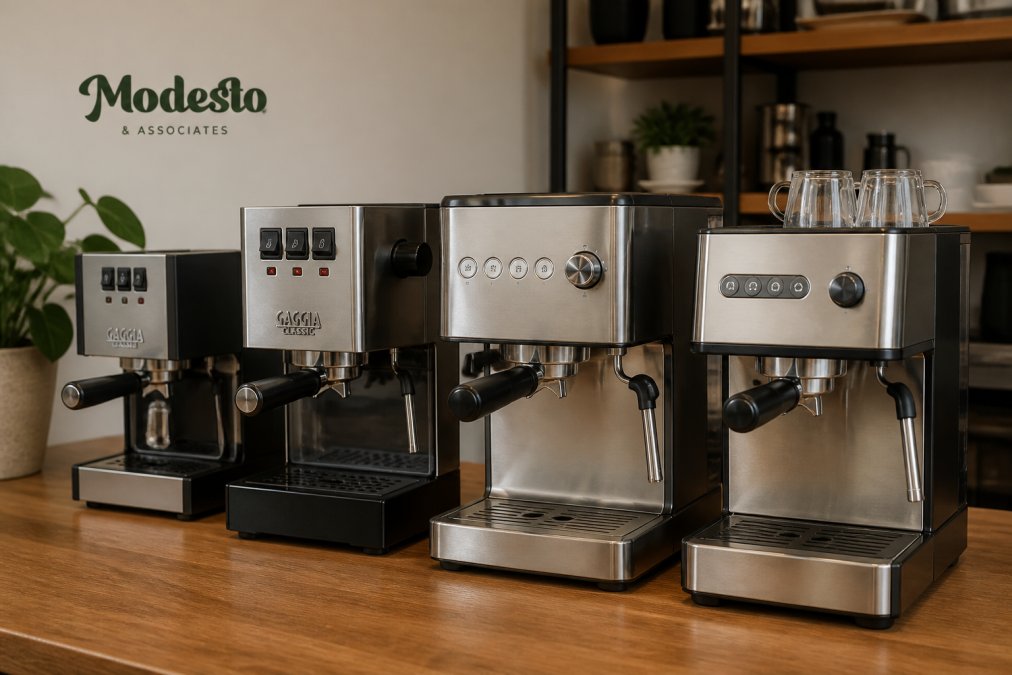
 comparison
Gaggia Alternative for Home Coffee Enthusiasts
Table of Contents
- Why Home Coffee Enthusiasts Seek a Gaggia Alternative
- Best Super-Automatic Espresso Machines for Home
- Semi-Automatic vs Super-Automatic Espresso Machines
- Espresso Machine Maintenance Tips for Longevity
- Pricing Breakdown: What to Expect at Each Tier
- Used Market Value and Upgrade Path
- Frequently Asked Questions
Last Updated: September 20, 2026
Why Home Coffee Enthusiasts Seek a Gaggia Alternative
The search for a gaggia alternative usually starts with the same frustration: a machine that pulls a good shot but demands a ritual you no longer have time for. Gaggia's single-boiler design has real limits, temperature surfing, long heat-up waits, and manual milk texturing wear thin when you make two drinks before a morning meeting.
Best Super-Automatic Espresso Machines for Home
The best super-automatic espresso machines for home match your daily drink count and patience for maintenance. Automation removes the variables that make single-boiler machines inconsistent: grind, dose, tamp, and timing all happen inside the machine.
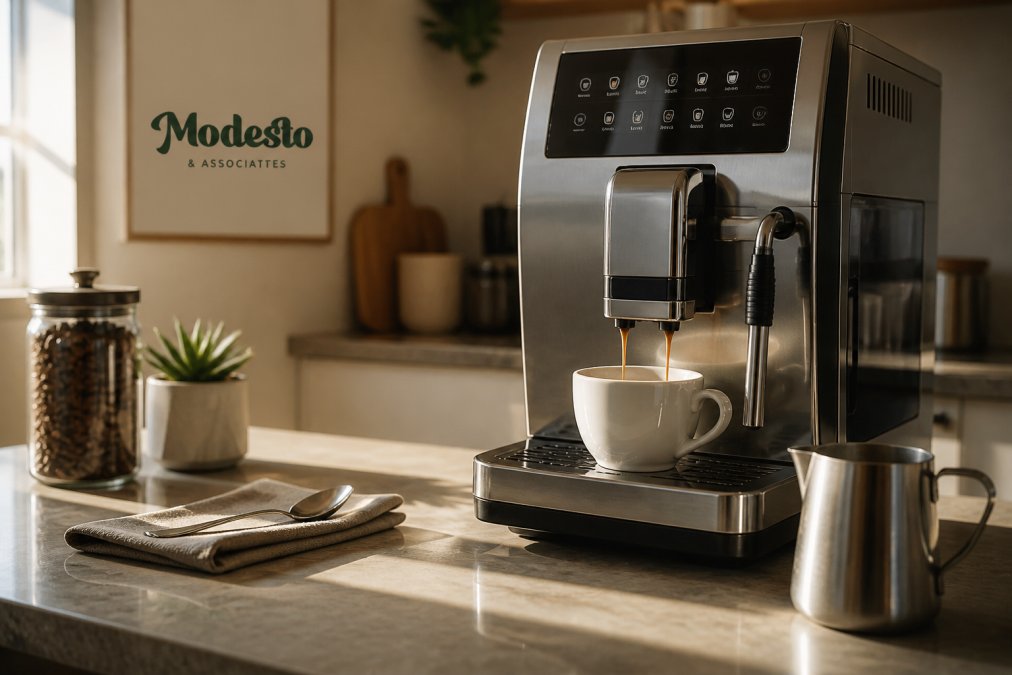
Modesto & Associates: Barista-Quality Automation
Modesto & Associates specializes in professional-grade super-automatic espresso machines and integrated milk cooling accessories: café-standard beverages at home with automated preparation, skipping the tamping, timing, and temperature guessing.
Profitec Go: Precision on a Budget
Profitec Go is a single-boiler machine with PID temperature control, an adjustable brew pressure valve, and a 58mm portafilter. It starts around $1,049.
Rancilio Silvia: The Tank That Lasts Decades
Rancilio Silvia is a single-boiler machine built around commercial-grade components: a 58mm chrome-plated brass portafilter, a large brass boiler, and a heavy steel frame. It starts around $865.
Ascaso Steel DUO PID: Dual Thermoblock Speed
Ascaso Steel DUO PID uses dual thermoblock heating with independent temperature control for brewing and steaming (Ascaso Steel Duo Professional Home Coffee Maker). It starts around $1,700.
| Machine | Starting Price | Heating System | Best For |
|---|---|---|---|
| Modesto & Associates | Varies by configuration | Super-automatic | Hands-off daily drinks |
| Profitec Go | $1,049 | Single boiler, PID | Precision on a budget |
| Rancilio Silvia | $865 | Single boiler | Long-term durability |
| Ascaso Steel DUO PID | $1,700 | Dual thermoblock | Fast brew-and-steam workflow |
Semi-Automatic vs Super-Automatic Espresso Machines
The core difference is who controls the variables. A semi-automatic leaves grind, dose, and tamp to you; a super-automatic handles all of it internally and delivers a finished drink at the press of a button. For a Gaggia owner, the real question is how each behaves in the fifteen minutes you have before leaving the house.
What each design actually does to your morning
A semi-automatic machine, including most Gaggia models, runs a fixed sequence: grind, dose, distribute, tamp, lock the portafilter, start the pump, watch the shot, then steam. On a single boiler, steaming means waiting for the boiler to climb to steam temperature, then waiting again for it to drop back before the next shot, the hidden tax on a Gaggia workflow.
Workflow timing: the comparison most guides skip
Most spec sheets list boiler size and wattage, not how long a full drink takes from cold start to finished cup. A common pattern:
- Single-boiler semi-automatic (stock Gaggia): 10 to 20 minutes to reach brew temperature, then 60 to 90 seconds of active work per shot, plus a 30 to 60 second recovery before steaming.
- Dual-circuit semi-automatic: 5 to 10 minutes to temperature, then the same 60 to 90 seconds of active work, but no recovery wait between brew and steam.
- Super-automatic: 30 to 60 seconds to warm the brew unit, then 20 to 40 seconds of hands-off time per drink, including milk.
Which one fits which enthusiast
Semi-automatic machines reward attention: tactile control, room to experiment with pressure profiling, and a clear upgrade path through grinders and modifications. They cost less up front and are easier to service yourself.
The upgrade path you are actually choosing
A semi-automatic machine is a platform: upgrade the grinder first, then add a PID, then move to a dual-boiler or dual-thermoblock unit. Each step is incremental and resellable.
Espresso Machine Maintenance Tips for Longevity
Espresso machine maintenance tips matter more than most buyers expect, because neglect kills machines early. The routine is short.
- Descale on schedule. Scale buildup is the leading cause of premature failure. Frequency depends on your water hardness, so test your water first.
- Use filtered water. Water filtration reduces scale and keeps boiler components cleaner between services.
- Backflush weekly. This clears coffee oils from the group and keeps flow rate control consistent.
- Clean the steam wand after every use. Dried milk clogs the tip and cuts steam power.
- Replace gaskets and shower screens annually. These cheap parts protect expensive ones.
Pricing Breakdown: What to Expect at Each Tier
Pricing falls into three broad bands, each buying a different kind of improvement. The mistake most buyers make is comparing sticker prices across bands instead of what each band removes from the routine. A $500 machine and a $1,700 machine solve different problems.
Entry-level: roughly $200 to $700
Entry-level machines get you into espresso but usually lack PID control and stable temperature. Many use a pressurized portafilter, which forgives a weak grinder but caps shot quality. Heat-up is fast, but temperature swings between shots are wide and milk steaming is slow.
Prosumer: roughly $700 to $1,800
This is where the Profitec Go and Rancilio Silvia sit, and the band that actually answers the Gaggia problem. Prosumer machines add thermal stability through PID control, better build quality with brass or stainless boilers, and a real upgrade path through 58mm accessories and standard parts.
Premium: roughly $1,800 to $3,500 and up
Premium machines add dual heating, faster workflow, and higher-end finishes. Dual boilers or dual thermoblocks eliminate the recovery wait, and rotary pumps run quieter and hold pressure more steadily than vibration pumps. Some add flow control for hand-profiling a shot.
The ownership cost nobody lists
Sticker price is only the first number. A more honest comparison includes:
- Consumables: descaling solution, backflush detergent, water filters, and gaskets. A typical home setup spends $50 to $150 per year on these, depending on water hardness and drink volume.
- Grinder: a semi-automatic machine is only as good as the grinder feeding it. Budget $200 to $600 for a burr grinder that matches a prosumer machine, or the machine's temperature stability is wasted.
- Service: semi-automatic machines are usually serviceable at home with basic tools. Super-automatic brew units and milk systems often require dealer service, and a single repair can run several hundred dollars.
- Water treatment: scale is the leading cause of premature failure. A $50 to $200 filtration setup extends the life of any machine in any band.
How to choose a tier
If workflow efficiency is the priority, premium pricing is justified because you buy back minutes every day. For the best shot quality per dollar, prosumer is the sweet spot. If you are still learning, entry-level is fine, as long as you accept it is a starting point, not a destination.
Used Market Value and Upgrade Path
Two factors most buyers ignore are resale and repairability, and both change the real cost of ownership.
Frequently Asked Questions
What are the best espresso machine brands for home enthusiasts?
The best brands depend on your priorities. For automation and café-style drinks with minimal effort, super-automatic machines from Modesto & Associates lead. For manual control and repairability, Rancilio and Profitec are top choices. Ascaso offers dual-thermoblock speed for advanced users. Each brand excels in a different area: convenience, build quality, temperature stability, or workflow efficiency. Match the machine to your daily routine rather than chasing specs alone.
How do super-automatic espresso machines compare to semi-automatic models?
Super-automatic machines grind, dose, tamp, and brew at the push of a button, and many include automatic milk frothing. Semi-automatic machines give you manual control over extraction but require more skill and cleanup. For busy professionals, super-automatics win on workflow efficiency and consistency. Semi-automatics suit hobbyists who enjoy tweaking brewing variables. The trade-off is convenience versus control. Most home users who entertain guests prefer super-automatic for speed and repeatability.
Is it worth upgrading from a Gaggia to a premium super-automatic machine?
If you value time, consistency, and café-quality drinks without manual effort, upgrading makes sense. Premium super-automatics offer PID temperature control, pre-infusion, and integrated milk cooling, which reduce guesswork and improve shot quality. They also handle multiple drink types for guests. The main drawbacks are higher upfront cost and a learning curve for settings. For daily drinkers who want barista results without the ritual, the upgrade pays off in convenience and reliability.
What features should home coffee enthusiasts look for in an espresso machine?
Prioritize thermal stability (PID controller or dual boiler), portafilter size (58mm for commercial compatibility), and pre-infusion for even extraction. Check build quality, serviceability, and warranty coverage. For super-automatics, look at grind consistency, flow rate control, and milk system ease of cleaning. Countertop footprint and heat-up time matter in small kitchens. A machine with strong technical support and available parts will last longer and hold value.
Are there reliable alternatives to Gaggia for high-quality home espresso?
Yes. Rancilio Silvia offers commercial-grade durability and a large brass boiler, though it lacks PID out of the box. Profitec Go provides PID precision and a 58mm portafilter at a mid-range price. Ascaso Steel DUO PID delivers dual thermoblock speed for simultaneous brewing and steaming. Modesto & Associates focuses on super-automatic convenience with integrated milk cooling. Each alternative targets a different balance of manual control, automation, and budget.
The real challenge with replacing a Gaggia is not finding a machine that pulls a good shot. It is finding one that fits how you actually make coffee every morning. If you want café-standard drinks without the temperature surfing and manual milk work, Modesto & Associates offers professional super-automatic machines and integrated milk cooling built for exactly that. Explore the current lineup and get started with Modesto & Associates to elevate your daily coffee ritual.