 blog
Best Espresso Machines for Home Entertaining
Table of Contents
- What Makes an Espresso Machine Ideal for Entertaining
- Super-Automatic Espresso Machines for Effortless Hosting
- Espresso Machines with Milk Frothers for Guest-Friendly Drinks
- Dual-Boiler Espresso Machines for Simultaneous Drinks
- Espresso Machines for a Crowd: Capacity and Speed
- Counter Space and Design Considerations
- Frequently Asked Questions
Last Updated: October 11, 2026
What Makes an Espresso Machine Ideal for Entertaining
When you're hosting friends or family, the best espresso machines for home entertaining do more than brew a single shot, they handle multiple drinks simultaneously, heat up quickly, and require minimal fuss between orders. The most successful home entertaining setups combine speed, consistency, and ease of use so the host can actually enjoy their guests instead of wrestling with equipment.
The ideal machine for entertaining prioritizes workflow efficiency. You need something that can produce back-to-back cappuccinos without long reheating cycles, froth milk smoothly for multiple drinks, and maintain temperature stability across numerous extractions. A machine that demands constant adjustment or has a 15-minute heat-up time will pull you away from your guests repeatedly.
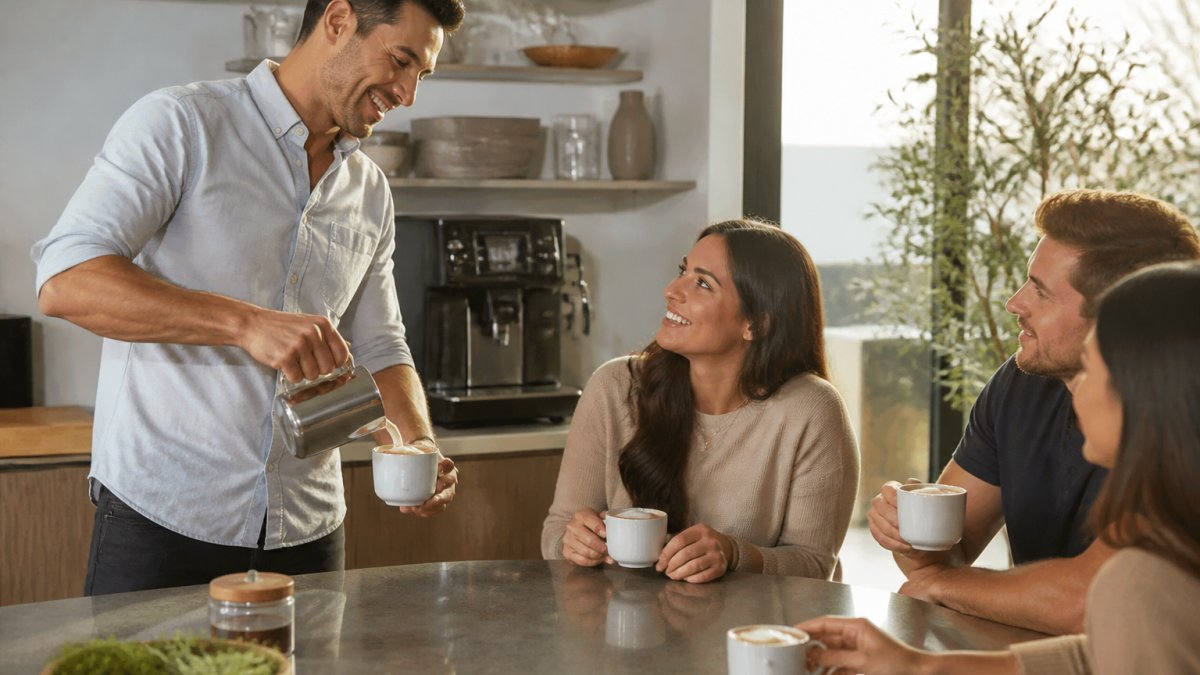
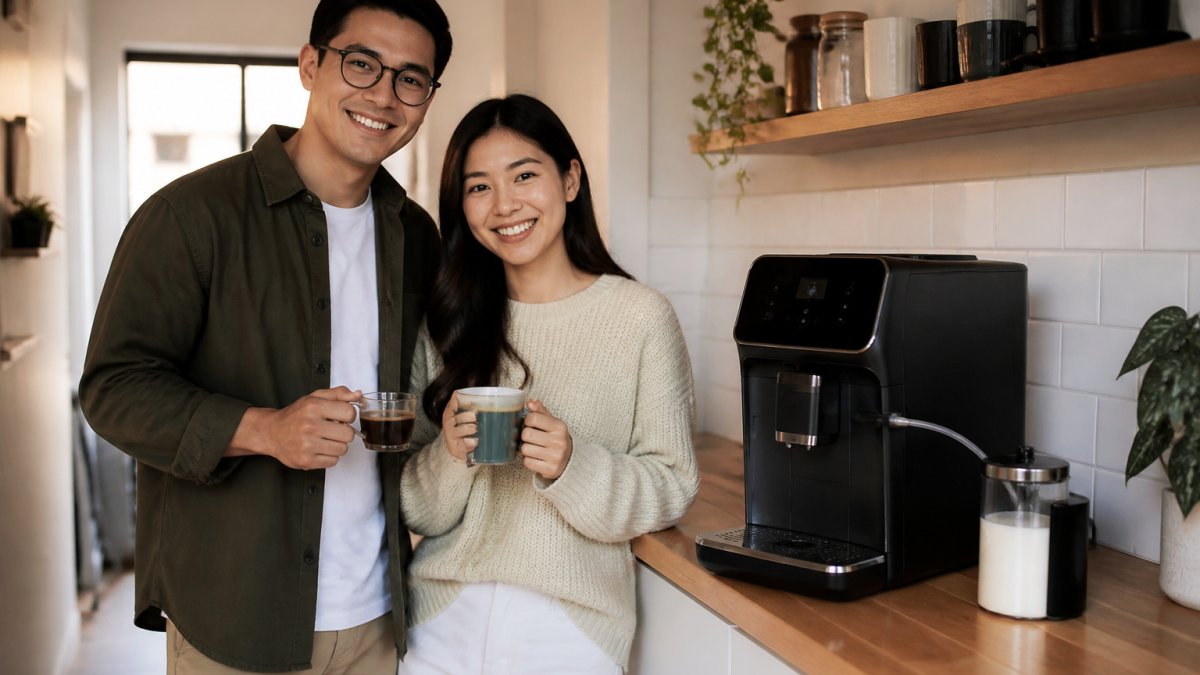
Consider counter space realistically. Most entertaining happens in kitchens where real estate is limited. A super-automatic espresso machine with an integrated grinder takes up less room than separate grinder and manual machine combinations, leaving you space for cups, milk, and guest movement.
Super-Automatic Espresso Machines for Effortless Hosting
Super-automatic espresso machines handle grinding, tamping, extraction, and milk frothing with a single button press. For entertaining, this matters enormously, you reduce variables, minimize user error, and maintain consistency across drinks even when you're distracted by conversation.
These machines are beginner-friendly by design. Your guests won't feel awkward watching you work, and you won't stress about pulling perfect shots. The machine does the heavy lifting. Most super-automatic models include integrated milk frothers that produce microfoam suitable for lattes and cappuccinos without requiring barista-level technique.
The trade-off is customization. You have less control over grind size, tamp pressure, and extraction time compared to manual machines. For entertaining purposes, this is actually an advantage, consistency beats flexibility when you're juggling multiple drink orders.
Espresso Machines with Milk Frothers for Guest-Friendly Drinks
A quality milk frother transforms your entertaining capability, but not all frothers perform equally when you're making multiple drinks in succession. Guests expect café-style cappuccinos and lattes, not just straight espresso shots, and the frother you choose determines whether you can deliver them quickly and consistently.
Automatic Milk Systems vs. Manual Steam Wands
Automatic milk frothers insert the pitcher, press a button, and the machine heats and froths to the correct texture. This matters when serving four people in succession, speed and consistency both improve dramatically. You're free to engage with guests instead of concentrating on steam-wand technique. The trade-off is less control over microfoam texture; some guests may prefer thinner foam for lattes, thicker for cappuccinos, and an automatic system locks you into one profile.
Manual steam wands demand barista-level technique but offer flexibility. You can adjust foam density on the fly for different drink preferences. However, under entertaining conditions, when you're distracted by conversation and managing multiple orders, manual wands introduce variables that can result in inconsistent drinks. A guest's cappuccino might have dense foam while the next person's latte is too thin.
Real-World Multi-Drink Testing
When testing machines for entertaining, the critical metric is how well the frother performs on the third, fourth, and fifth consecutive milk-based drink. Does the steam pressure remain consistent? Does milk texture degrade as the boiler cools slightly between drinks? Does the frother recover quickly enough that you're not standing idle between orders?
Machines with dual boilers or thermoblock heating systems maintain steam temperature more reliably across multiple drinks than single-boiler machines. A single-boiler machine may produce excellent microfoam on drink one, but by drink three, the boiler has cooled slightly and foam quality drops. For entertaining, this inconsistency is visible and awkward.
Handling Guest Preferences
Not every guest wants the same drink. Some prefer cappuccinos (more foam), others want lattes (less foam), and some may request decaf or alternative milk. Machines with responsive frothers that heat milk quickly let you switch between guests' preferences without long waits. If your frother takes 90 seconds to heat and froth a pitcher, serving a group of six becomes a 10-minute production.
Automatic milk systems excel here because they're fast and repeatable. You can serve a cappuccino, then immediately froth oat milk for the next guest without adjusting technique. The consistency matters more than perfection when you're juggling multiple orders.
Capacity and Cleanup Between Rounds
During entertaining, you'll froth milk repeatedly. Machines with larger steam boilers or thermoblock systems recover faster between drinks. A machine that requires 45 seconds of idle time between milk drinks creates awkward pauses in your hosting rhythm.
Also consider milk residue. Automatic frothers often have internal milk lines that require purging between drinks to prevent buildup. Manual steam wands need immediate wiping after each use. For entertaining, a frother that purges automatically or requires minimal cleanup between rounds reduces friction and keeps you present with guests rather than fussing with equipment.
Dual-Boiler Espresso Machines for Simultaneous Drinks
Dual-boiler machines maintain separate water temperatures for espresso extraction and milk steaming. This eliminates the wait between pulling a shot and frothing milk, you can work on both simultaneously.
For entertaining, dual-boiler systems reduce the time guests spend watching you work. You can pull espresso shots while steaming milk for the previous order, creating a continuous workflow that keeps drinks flowing. The machine handles the thermal management automatically.
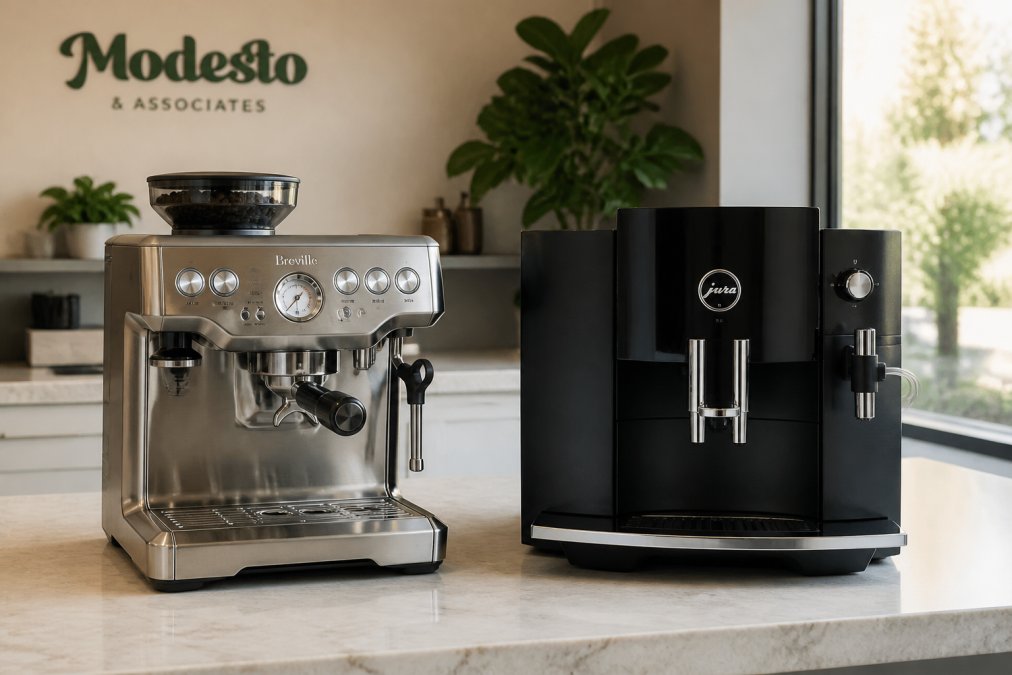
Dual-boiler machines require more familiarity than super-automatics. You'll manage the portafilter, grind, and tamp yourself. But the speed advantage during entertaining is substantial, especially when serving a crowd.
Espresso Machines for a Crowd: Capacity and Speed
Capacity matters less than recovery time when entertaining, but "recovery" encompasses more than just boiler reheating. It includes your ability to manage the entire workflow: pulling shots, frothing milk, emptying grounds, and keeping the machine ready for the next order without interrupting conversation or creating bottlenecks in your kitchen.
Shot Recovery and Thermal Stability
A machine that pulls excellent shots but needs five minutes between extractions will frustrate both you and your guests. Look for machines with responsive heating systems and boilers sized for continuous use. Heat-up time under 60 seconds lets you turn on the machine as guests arrive. Fast recovery between shots, ideally under 30 seconds, keeps the workflow moving.
Some super-automatic models achieve this through thermoblock technology, which heats water on-demand rather than storing it in a large boiler. Dual-boiler machines maintain separate water temperatures for espresso and steam, eliminating the wait between pulling a shot and frothing milk. Both approaches work for entertaining; the key is that the machine doesn't force you to pause between drinks.
Drip-Tray Capacity and Continuous-Use Durability
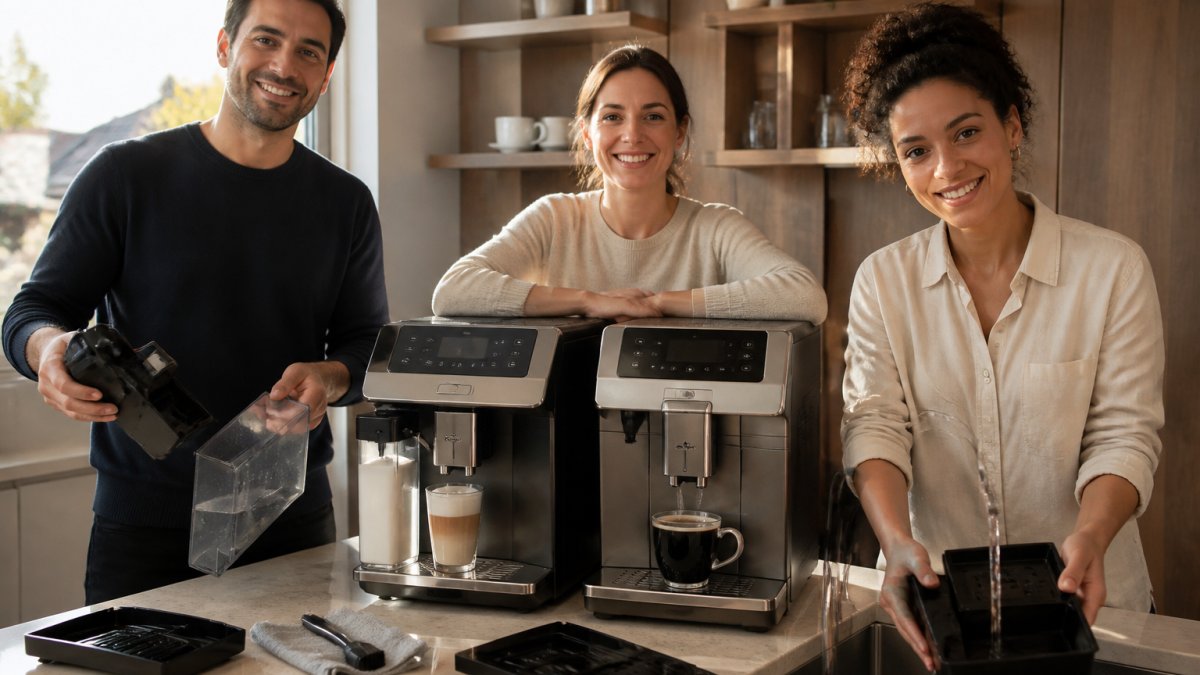
When you're making six drinks in 20 minutes, the drip tray fills faster than during everyday use. A shallow tray forces you to empty it mid-entertaining, pulling you away from guests. Look for machines with drip trays that hold at least 32 ounces of liquid, enough for 4-5 drinks before emptying becomes necessary.
Also consider the machine's design for continuous use. Some machines are engineered for one or two drinks per day; others are built for back-to-back extraction. Check whether the manufacturer specifies a duty cycle or continuous-use rating. Machines designed for café use (even compact home models marketed as café-style) tend to handle rapid-fire orders better than those optimized for single-user daily routines.
Noise and Social Ambiance
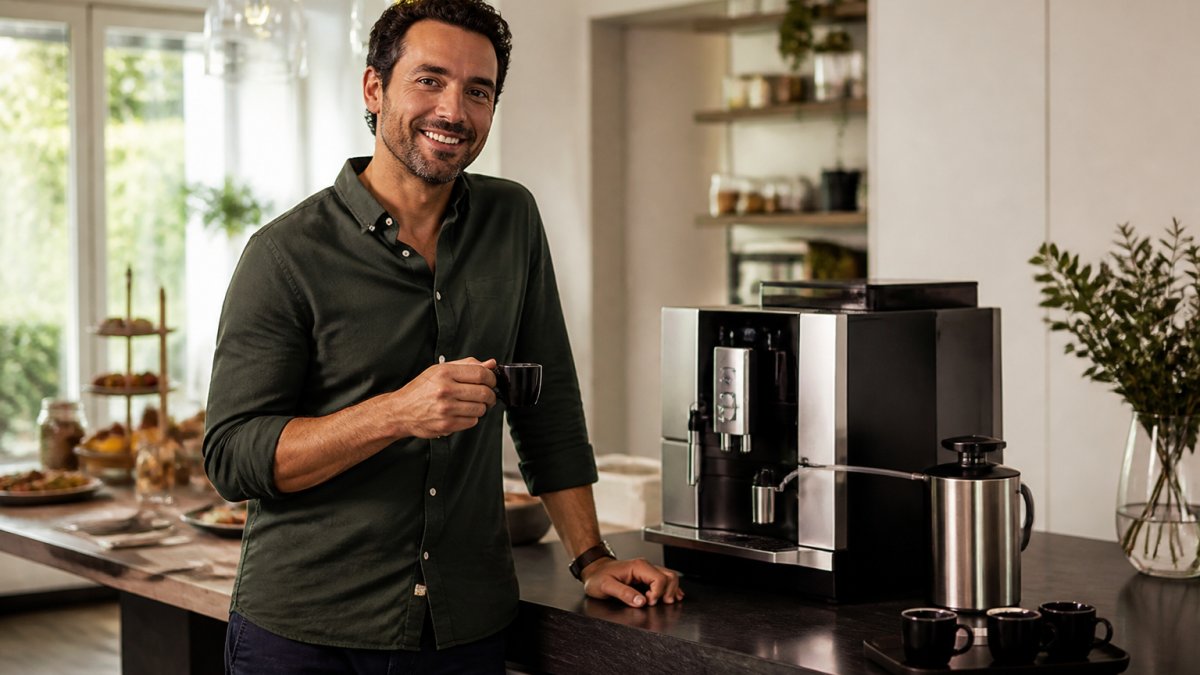
Often overlooked: espresso machine noise during entertaining. A loud grinder or screaming steam wand disrupts conversation and makes guests feel like they're imposing on your time. Super-automatic machines with integrated grinders tend to be noisier than manual machines with separate grinders, but the noise is brief and predictable, guests understand you're making their drink.
Manual machines with external grinders let you grind beans before guests arrive, eliminating mid-entertaining noise. However, if you're using a super-automatic for speed, accept that a 10-second grinding cycle is part of the workflow. Choose a machine with a grinder rated for quieter operation if noise is a concern in your entertaining space.
Staging and Workflow Setup
Before guests arrive, arrange your station: portafilter (if manual), ground beans or bean hopper (if super-automatic), milk pitcher, cups, and a small towel for steam-wand purging. This staging reduces fumbling during entertaining. Machines with accessible bean hoppers and easy-to-reach portafilter baskets speed up your workflow.
For super-automatics, pre-program drink sizes if the machine allows it. Many models let you set a button for "single shot," "double shot," or "cappuccino," so you're not adjusting settings while guests watch. This perceived simplicity, pressing one button and getting a drink, is part of what makes entertaining feel effortless.
Handling Multiple Drink Types Simultaneously
When entertaining, you may need to pull an espresso shot while steaming milk for someone else's cappuccino. Dual-boiler machines handle this seamlessly. Single-boiler machines force you to choose: pull the shot first, then wait for the boiler to reheat before steaming milk, or steam milk first and wait for the boiler to cool before pulling the next shot.
For groups of four or fewer, a responsive single-boiler machine works fine. For larger gatherings, a dual-boiler system or high-end super-automatic with separate heating circuits keeps drinks flowing without awkward waits.
| Feature | Why It Matters for Entertaining | What to Look For |
|---|---|---|
| Heat-up time | Guests don't wait before service begins | Under 60 seconds from cold start |
| Shot recovery | Drinks flow without long pauses | 20-30 seconds between extractions |
| Drip-tray capacity | Minimize interruptions to empty grounds | At least 32 ounces before emptying needed |
| Milk frothing speed | Multiple milk-based drinks served quickly | Integrated frother or responsive steam wand |
| Boiler design | Continuous use without temperature drops | Dual-boiler, thermoblock, or café-rated system |
| Noise level | Preserve conversation and social comfort | Quieter grinder or pre-grinding workflow |
| Programmable drinks | Reduce settings adjustments mid-entertaining | One-touch buttons for common orders |
Counter Space and Design Considerations
Entertaining at home means your espresso machine is visible. The machine becomes part of your kitchen aesthetic, not hidden in a back room. Choose something that looks intentional and professional rather than industrial or utilitarian.
Compact super-automatic machines occupy roughly 12-15 inches of counter depth, comparable to a coffee maker. They look modern and fit naturally into contemporary kitchens. Larger manual machines or those with separate grinders demand significantly more space and visual weight.
The machine's footprint affects guest flow around your kitchen. A bulky setup blocks movement and creates awkward sightlines. We offer machines designed for visible placement, they look as good as they perform.
When you're entertaining at home, the best espresso machines for home entertaining should fade into the background operationally while delivering café-quality drinks consistently. We specialize in super-automatic and dual-boiler machines engineered for exactly this purpose, machines that handle multiple drinks rapidly, maintain temperature stability, and require minimal adjustment between orders. Browse our curated selection of professional-grade espresso machines with integrated milk cooling solutions to find the right fit for your entertaining style and kitchen space.
Frequently Asked Questions
What features should I look for in an espresso machine for entertaining guests?
Prioritize machines with integrated milk frothers, fast heat-up times, and high-pressure boilers for consistent extraction. Super-automatic models eliminate guesswork, letting guests enjoy café-quality drinks without barista training. Dual-boiler systems let you brew espresso and froth milk simultaneously, reducing wait times when serving multiple people. Look for user-friendly controls and a compact footprint that fits your kitchen.
Can one espresso machine make several drinks in a row for a crowd?
Yes, but speed depends on the machine's design. Dual-boiler espresso machines excel here because they brew espresso while simultaneously frothing milk, cutting preparation time in half. Super-automatic models streamline the process further by grinding, tamping, and extracting at the push of a button. Heat-up time matters too, machines with thermoblock or multi-boiler systems reach temperature faster between shots, keeping the workflow smooth.
Are super-automatic espresso machines good for entertaining?
Super-automatic espresso machines are excellent for entertaining because they remove technical barriers. Guests don't need espresso knowledge to operate them, just load beans, select the drink size, and the machine handles grinding, tamping, extraction, and milk frothing. This consistency means every cappuccino or latte tastes professional, and you stay focused on hosting rather than troubleshooting. They're ideal when you want to serve café-quality beverages without stress.
How long does it take to break even on a home espresso machine investment?
The payback period depends on your current coffee spending and the machine you choose. Frequent coffee shop visitors who spend $5-7 per drink multiple times weekly can offset a machine's cost within months to a year of home brewing. Hosting regularly amplifies the savings, serving guests café-quality drinks at home costs far less than treating them to a café outing. Factor in the convenience and quality improvement as additional returns beyond pure cost recovery.